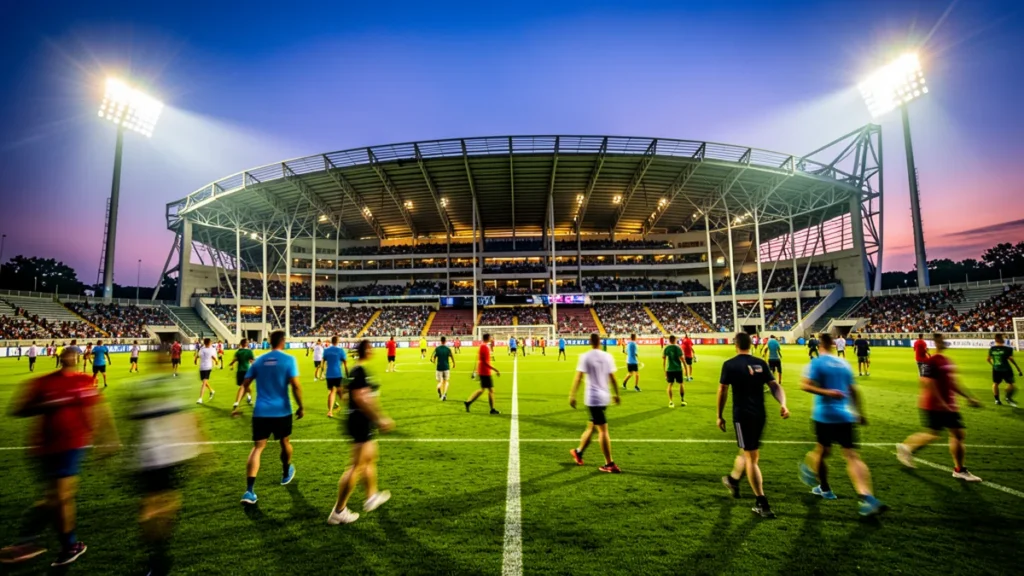
Watching a live match can involve much more than the ticket price. Small decisions about transport, food and merchandise make the total easier to manage before the atmosphere encourages extra purchases.
Define useful value in your own terms
Evaluating a sports fan’s match-day budget starts with what you will actually use, not the broadest list of advertised features. Establish official ticket prices and permitted entry arrangements and describe the practical outcome it supports. A purchase can be inexpensive and still be poor value if it does not fit the situation. Equally, a higher price may be reasonable when it solves a real recurring problem. The comparison needs your actual habits rather than somebody else’s ideal routine.
Include effort, waste and maintenance
Check travel options for the actual finishing time, then account for venue rules on bags, food and payment methods. Look beyond acquisition to the work required to keep the choice useful. Storage, travel, cleaning, preparation or administration may change the result even when they do not appear on a receipt. Use your own recent experience where possible. If you lack evidence, label the assumption and test it on a small scale before committing to an expensive or inflexible arrangement.
Avoid a saving that creates more spending
Planning the return journey around a normal timetable can create an expensive surprise when the match finishes late. Ask what you would buy or do if the promotion or upgrade were unavailable. That alternative is a useful baseline for a sports fan’s match-day budget. Any extra spending should have its own practical justification rather than being hidden inside the idea of saving money. A smaller commitment can be sensible while you learn more about your needs. There is no requirement to use every feature simply because a package includes it.
Run a practical comparison
Decide on your total event allowance before leaving home. Check the venue’s official rules and transport operator’s current service information, then choose which extras matter most to you. After trying the approach, compare expected use with actual use and note any friction you did not anticipate. Keep the review specific: what worked, what went unused and what would change the decision. Revisit a sports fan’s match-day budget when your routine changes, not every time a new advertisement appears. Useful value comes from a good fit over time rather than a single optimistic calculation at the moment of purchase.
The purpose of a sports fan’s match-day budget is to support participation you actually enjoy. Keep safety requirements, ordinary access costs and optional upgrades in separate parts of the decision. Ask the venue, organizer or manufacturer about the rules relevant to your activity rather than copying another athlete’s shopping list. Spending more is not a substitute for appropriate equipment or instruction, and a smaller plan can still support a satisfying sporting routine when it fits your needs.
A little advance planning protects the part of the day you value without requiring every possible purchase.